
The white grape
Chardonnay: dry or sweet, its taste, its regions and our organic Chardonnay from Fronton
Born in Burgundy, planted all over the world: one grape, very different wines.


Is Chardonnay dry or sweet?
Chardonnay is a grape variety, not a style of wine: depending on how it is made, it gives a dry white, a sweet wine or a sparkling wine, such as blanc de blancs Champagne. Most often it is made as a dry white. The label decides: “dry” means no more than 4 grams of sugar per litre (9 grams if acidity is high), “medium sweet” up to 45 grams. Yet a dry Chardonnay can feel round, almost sweet: that comes from oak ageing and malolactic fermentation, which bring richness and notes of butter, hazelnut or brioche, not sugar.
At Château Saint Louis, a 35-hectare organic estate in Labastide-Saint-Pierre, between Toulouse and Montauban, our Chardonnay is a dry white wine with no perceptible residual sugar: 60% of the blend is aged for nine months in French oak barrels, the rest in concrete tanks, to keep the freshness of the terroir.
- 54,993 haof Chardonnay in France in 2018
- 7,325 hain 1958: seven times less
- 211,000 haworldwide, according to the OIV (2015)
- 4 g/lof sugar at most for a dry wine
Reading the label
Dry, medium dry, medium sweet, sweet: what the terms mean
For a still wine, white or not, these words have a legal definition based on residual sugar content. It applies to Chardonnay as to every other grape.
| Term | Residual sugar | How it tastes |
|---|---|---|
| Dry | 4 g/l at most, or 9 g/l if total acidity is no more than 2 g/l below the sugar | no sweetness |
| Medium dry | up to 12 g/l, or 18 g/l if total acidity is no more than 10 g/l below the sugar | a hint of sweetness |
| Medium sweet | above that, up to 45 g/l | clear sweetness |
| Sweet | at least 45 g/l | a dessert wine |
Source: Commission Delegated Regulation (EU) 2019/33, Annex III, Part B.
Identity card
Where does Chardonnay come from?
Chardonnay comes from Burgundy. Genetic analyses show it to be a natural cross between Pinot and Gouais Blanc, an old variety that has now almost disappeared. From there it spread to Champagne, the Jura, Languedoc and the South-West, then to every vineyard in the world.
- Colour
- White grape.
- Origin
- Burgundy.
- Parents
- Pinot and Gouais Blanc, according to published genetic analyses.
- Other name
- No officially recognised synonym in France or the European Union.
- In France
- 7,325 hectares in 1958, 54,993 in 2018.
- Worldwide
- About 211,000 hectares in 2015, according to the OIV.
Sources: Plantgrape Chardonnay sheet, catalogue of grape varieties in France; OIV, Focus 2017.
In the glass
What does Chardonnay taste like?
Not very aromatic in itself, Chardonnay faithfully reflects its climate and the winemaker’s hand. In a cool climate it stays lively, with citrus, green apple and a mineral impression; in a warm climate it grows rounder, with peach, ripe pear and tropical fruit. Oak adds vanilla, toast and hazelnut; malolactic fermentation, butter and brioche.
Cool climate
- lemon
- green apple
- mineral notes
Warm climate
- peach
- ripe pear
- pineapple
Ageing (élevage)
- butter
- brioche
- hazelnut
- vanilla
Where it grows
The great Chardonnay regions
- Burgundy
- Its birthplace: Chablis in the north, taut and mineral; the Côte de Beaune and the Mâconnais, fuller.
- Champagne
- One of the three main grapes of the appellation; blanc de blancs is made from white grapes, most often Chardonnay alone.
- Jura, Languedoc, South-West
- Lesser-known expressions, including the IGP Comté Tolosan around Toulouse, where ours grows.
- The rest of the world
- California, Australia, Chile, South Africa, New Zealand, Italy: often sunnier in style, with ripe fruit and oak.
At Château Saint Louis
Our organic Chardonnay, between barrel and tank
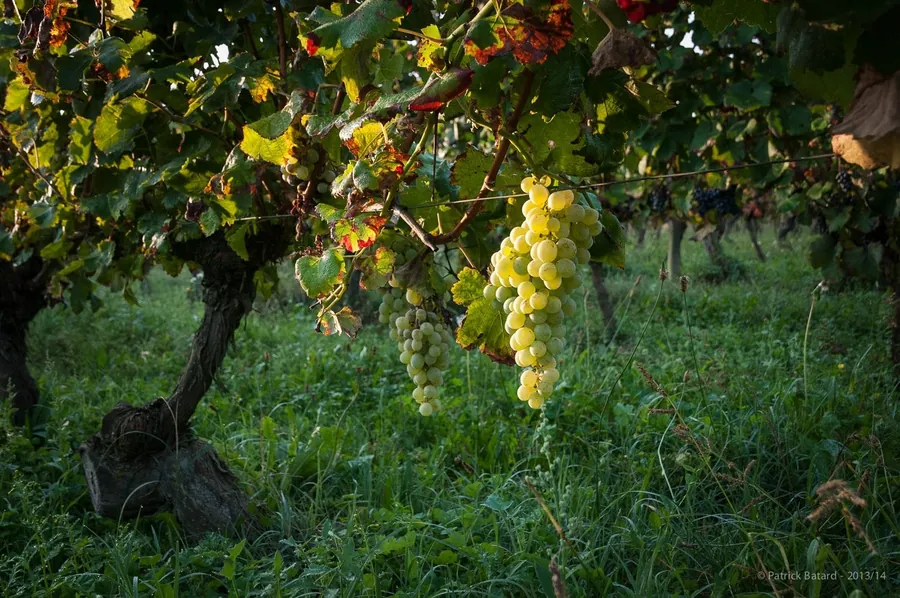
Our Chardonnay vines are 25 years old on average and grow on boulbène, a silty sand lying on a clay layer, farmed under certified organic agriculture. The wine is sold under the IGP Comté Tolosan.
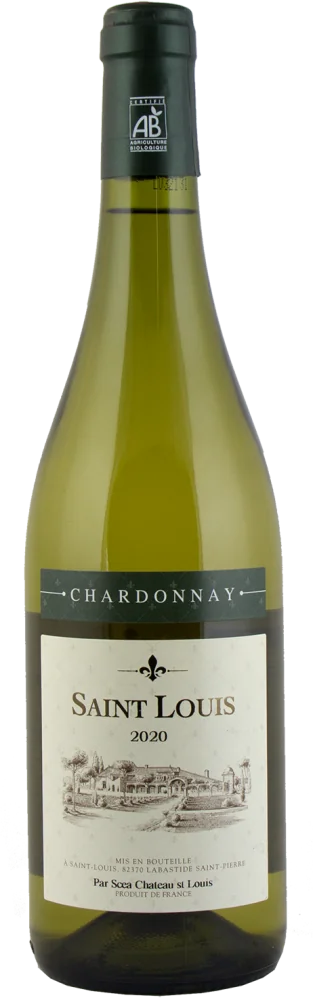
The harvest goes into a pneumatic press, settles at 6 °C and ferments at low temperature. 60% of the blend is aged for nine months in French oak barrels, for richness and hazelnut; the rest in concrete tanks, for freshness. On the nose, pear, quince and fresh hazelnut; on the palate, roundness and a spicy finish.
Earlier vintages have won a gold medal at the Concours International de Lyon 2022 and a star in the Guide Hachette des Vins 2022 and 2013.
Discover our organic Chardonnay The estate shop
Taste our Chardonnay
Certified organic and sold direct, with no middleman between the cellar and your table.
At the table
What to serve with Chardonnay?
- grilled fish or fish in beurre blanc, seafood
- poultry in cream sauce, mushroom risotto
- goat’s cheeses and pressed cheeses
- for ours: monkfish skewers with smoked bacon, lamb crépinettes with Crottin de Chavignol
Serve it cool, at 10 to 12 °C: any colder and it loses its aromas.
Find the wine for your dishYour questions
Frequently asked questions
Is Chardonnay a dry wine?
Most often, yes. Chardonnay is a grape variety, and it is mainly made as a dry white: no more than 4 grams of sugar per litre, or 9 grams if acidity is high. There are also sweet and sparkling Chardonnays; the term on the label tells you.
Why do some Chardonnays seem sweet?
Because oak ageing and malolactic fermentation round out the wine and give it notes of butter, vanilla or brioche. That roundness is mistaken for sweetness, while the wine stays dry.
Where does Chardonnay come from?
From Burgundy. Genetic analyses show it to be a cross between Pinot and Gouais Blanc. France had 54,993 hectares of it in 2018, compared with 7,325 in 1958.
Does Champagne contain Chardonnay?
Yes, it is one of the main grapes of Champagne. A blanc de blancs Champagne is made from white grapes, most often Chardonnay alone.
At what temperature should Chardonnay be served?
Cool, at 10 to 12 °C. Too cold, it loses its aromas; too warm, it feels heavy.
Is Château Saint Louis Chardonnay dry?
Yes. Our organic Chardonnay, an IGP Comté Tolosan, is a dry white wine with no perceptible residual sugar. 60% of the blend is aged for nine months in French oak barrels and the rest in concrete tanks: the roundness of the wood, the freshness of the boulbène terroir.
Further reading
- Fronton wineThe appellation, its grapes, its rules and its red and rosé wines.
- NégretteThe grape of Fronton, its history and a map of the twenty municipalities of the appellation.
- TannatThe tannic grape of South-West France, from Madiran to Uruguay.
- Visit the estateVisit and tasting at Château Saint Louis, by appointment Monday to Saturday.
Sources
- Chardonnay grape variety sheet Plantgrape
- Distribution of the world’s grapevine varieties OIV, 2017
- Commission Delegated Regulation (EU) 2019/33, Annex III EUR-Lex
- Chardonnay on Wikipedia Wikipédia


