
The grape of Beaujolais
Gamay: the Beaujolais grape, its taste, its crus and our organic wines
A black grape with white juice, all fruit, from Beaujolais to Fronton.


What is Gamay?
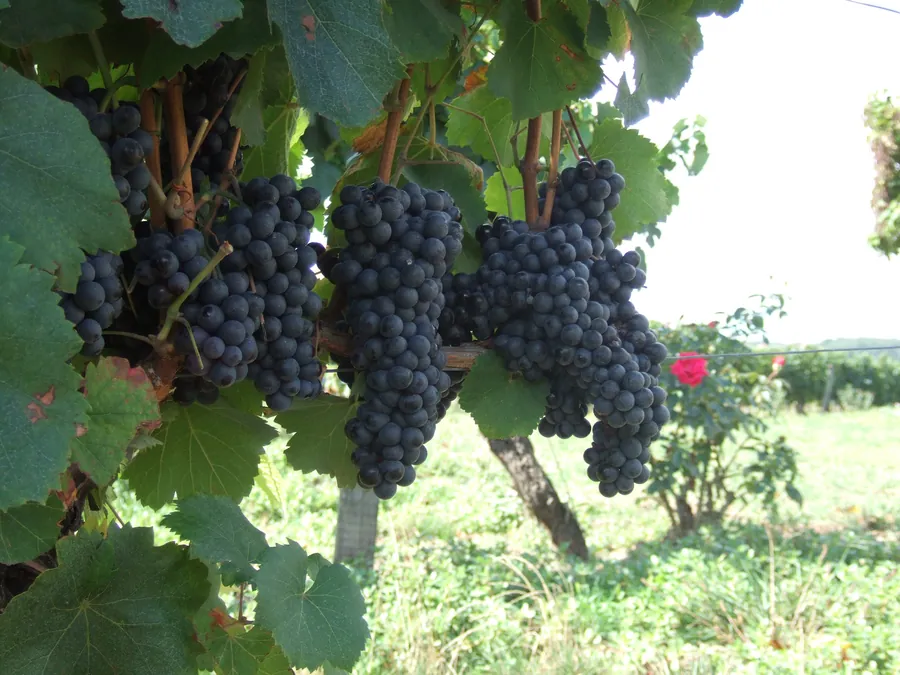
Gamay, full name Gamay noir à jus blanc, is a black grape from Burgundy: its skin is black, but its pulp and juice are colourless. It is the grape of red Beaujolais, where it makes fruity wines with raspberry, blackcurrant and spice, low in tannin, often made by semi-carbonic maceration. Genetic analyses published in 1999 show it to be a natural cross between Pinot Noir and Gouais Blanc, like Chardonnay. It is also grown in the Loire, Savoie, Auvergne, Switzerland and South-West France. In Fronton it is allowed on up to 15% of the vines: at Château Saint Louis it makes up 30% of our rosé and 5% of the Cuvée Tradition.
Identity card
The grape at a glance
- Colour
- Black grape with white juice: the skin is black, the pulp and juice are colourless.
- Origin
- Burgundy, probably the hamlet of Gamay in Saint-Aubin, on the Côte de Beaune.
- Parents
- Pinot Noir and Gouais Blanc, according to the 1999 genetic analyses: the same as Chardonnay.
- Other names
- Gamay noir à jus blanc, Gamay Beaujolais.
- Plantings
- About 33,000 hectares worldwide in 2000, including 30,000 in France and 22,000 in Beaujolais.
- In Fronton
- A secondary grape of the AOC, up to 15% of an estate’s vines.
In the glass
What does Gamay taste like?
Gamay makes bright-coloured reds, low in tannin and very fruity: raspberry, blackcurrant, sometimes apple or pear, with a spicy touch of peony or pepper. Semi-carbonic maceration, the Beaujolais method, softens its acidity and lifts the fruit. Simple wines are drunk young; Beaujolais crus can keep five to ten years. In rosé, it brings freshness and fruit.
Fruit
- raspberry
- blackcurrant
- apple and pear
Spices
- peony
- pepper
- little tannin
Where it grows
From Beaujolais to Fronton
- Beaujolais
- Its great vineyard: most reds there are made from Gamay, from Beaujolais and Beaujolais-Villages to the ten crus, Brouilly, Chénas, Chiroubles, Côte-de-Brouilly, Fleurie, Juliénas, Morgon, Moulin-à-Vent, Régnié and Saint-Amour.
- The Loire
- In Touraine, around Tours, it is often blended with Cabernet Franc and Côt.
- Switzerland
- The second country for Gamay, with 1,145 hectares in 2020, mostly in Valais.
- Savoie and Auvergne
- It is also found in Savoie, Auvergne, Franche-Comté and South-West France.
- Fronton
- A secondary grape of the AOC, up to 15% of the vines, behind Négrette.
At Château Saint Louis
Our rosé and the Cuvée Tradition
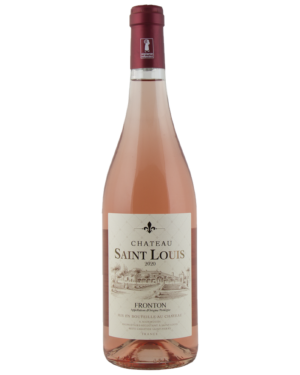
At Château Saint Louis, Gamay always goes with Négrette. It makes up 30% of our AOC Fronton rosé, made by direct pressing and fermented for about ten days below 18 °C: it brings freshness and fruit.
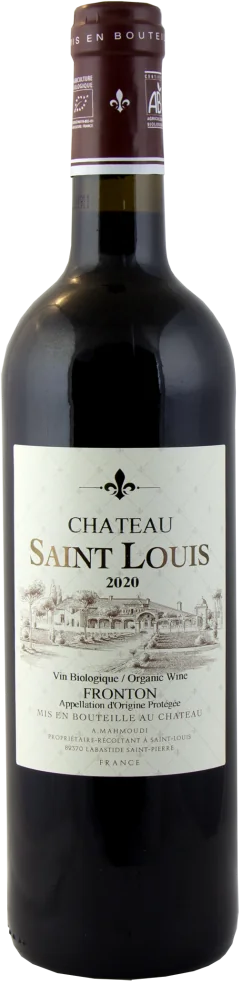
It also makes up 5% of the Cuvée Tradition, with Négrette (70%), Syrah (20%) and Cabernet Franc (5%). Like all the estate’s vines, these have been farmed under certified organic agriculture since 2005.
Come and taste at the estate The estate shop
The cuvées
Certified organic and sold direct, with no middleman between our cellar and your table.
At the table
What to serve it with?
- charcuterie and Lyonnaise cooking
- roast poultry
- fresh cheeses
Your questions
Frequently asked questions
Is Beaujolais made from Gamay?
Yes. Most red Beaujolais wines are made from Gamay, from Beaujolais Nouveau to the ten crus such as Morgon, Fleurie or Moulin-à-Vent.
Why is it called “Gamay noir à jus blanc”?
Because its skin is black but its pulp and juice are colourless. The colour of red wine comes from the skin, during maceration.
What does a Gamay wine taste like?
A fruity red, low in tannin: raspberry, blackcurrant, sometimes a spicy note of peony or pepper. It is usually drunk young.
When is Beaujolais Nouveau released?
On the third Thursday of November, a rule in force since 1985. Before that, it was released on 15 November.
Why was Gamay driven out of Burgundy?
In 1395, Duke Philip the Bold had the “disloyal” Gamay uprooted, as it competed with Pinot Noir. The grape fell back on Beaujolais, where it still reigns.
Is Gamay allowed in Fronton wine?
Yes, it is a secondary grape of the AOC Fronton, limited to 15% of each estate’s vines, with Négrette remaining the majority.
Which Château Saint Louis wines contain Gamay?
Our AOC Fronton rosé, with 30% Gamay and 70% Négrette, and the Cuvée Tradition, which contains 5%.
Further reading
- Chardonnay: dry or sweet?The white grape born in Burgundy: the sugar terms, its taste depending on climate and oak, its regions.
- NégretteThe grape of Fronton, its history and a map of the twenty municipalities of the appellation.
- SyrahThe Rhône grape, from violet to pepper.
- Fronton wineThe appellation, its grapes, its rules and its red and rosé wines.
Sources
- Gamay on Wikipedia (in French) Wikipédia
- The Beaujolais appellation on Wikipedia (in French) Wikipédia
- Fronton AOC specification INAO


