

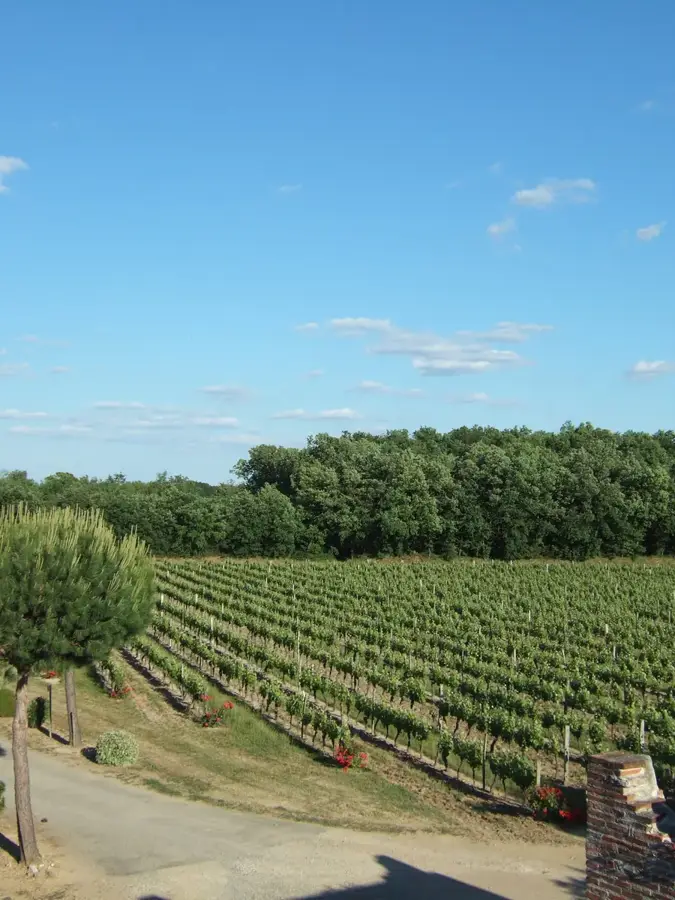
The appellation north of Toulouse
Fronton wine: the AOC, its grapes, its terroir and its red and rosé wines
Reds and rosés born of Négrette, between Toulouse and Montauban.


What is Fronton wine?
Fronton is a protected designation of origin in South-West France, some twenty kilometres north of Toulouse, covering twenty villages in Haute-Garonne and Tarn-et-Garonne. It produces only still red and rosé wines, and it rests on a grape grown almost nowhere else: Négrette, which must make up at least 51% of each estate’s vines and at least 40% of each wine, where it remains the majority. The reds offer aromas of red and black fruit, flowers, spice and liquorice; the rosés are fruity and low in acidity. There is no white Fronton: the region’s whites, like our Chardonnay, are sold as IGP Comté Tolosan.
- 20municipalities in the Fronton appellation area
- 51 %Négrette at least in the vineyard of every estate in the appellation
- 40 %at least in every Fronton wine, where it remains the main grape
- 2/3of production is red, one third rosé
The grape varieties
Which grapes go into Fronton wine?
Négrette first, then supporting grapes, each with a ceiling. The percentages apply to all of an estate’s vines.
| Grape variety | Role | Share of the vines |
|---|---|---|
| Négrette | main grape | at least 51% |
| Syrah | supporting | 40% at most |
| Cot (Malbec) | supporting | 25% at most |
| Fer | supporting | 25% at most |
| Cabernet Franc, Cabernet Sauvignon | supporting | 25% at most, combined |
| Gamay | supporting | 15% at most |
| Négret Pounjut, Bouysselet | old supporting grapes | 10% at most each |
| Cinsaut, Mérille | supporting | 5% at most, combined |
Marselan is allowed up to 5% as a variety for climate adaptation. Tannat, the grape of Madiran, is not one of them. Source: specification of the Fronton PDO. Tannat, a grape of South-West France
In the glass
Red and rosé: what the appellation says
- The reds
- Red and black fruit, flowers, spice, liquorice; present tannins that round out with age. Pleasant young, they also keep.
- The rosés
- Fruity and low in acidity, with a colour ranging from lychee to raspberry; best drunk young.
- Ageing (élevage)
- The reds are aged at least until 15 January after the harvest and sold from 1 February.
- Dry wines
- 3 grams of sugar per litre at most for a red, 4 grams for a rosé.
- Yields
- 50 hectolitres per hectare for the reds, 60 for the rosés.
- A local rule
- Continuous presses are banned, to avoid extracting too much tannin.
Source: specification of the Fronton PDO.
The terroir
Twenty villages on the terraces of the Tarn
The Fronton PDO brings together nine villages in Haute-Garonne and eleven in Tarn-et-Garonne, between Toulouse and Montauban. The vines grow on the terraces left by the Tarn: poor, acidic, well-drained soils of gravel, sand and pebbles, without limestone, where Négrette, fragile elsewhere, has found its place.
Château Saint Louis
The twenty municipalities
Haute-Garonne : Bouloc, Castelnau-d’Estrétefonds, Fronton, Saint-Rustice, Vacquiers, Villaudric, Villematier, Villemur-sur-Tarn, Villeneuve-lès-Bouloc.
Tarn-et-Garonne : Bessens, Campsas, Canals, Dieupentale, Fabas, Grisolles, Labastide-Saint-Pierre, Montbartier, Nohic, Orgueil, Pompignan.
From Villemur to the AOC
From Côtes du Frontonnais to AOC Fronton
- 18th and 19th centuries
The vineyard at its height: loaded at Villemur, the wines sail down the Tarn to Bordeaux and on to all of Europe.
- 1878
Phylloxera reaches the Frontonnais. “Négret”, as it was then called, is replanted on rootstock. The same year, Château Saint Louis is founded.
- 1945
Fronton wines receive their first appellation, a year after those of Villaudric.
- 1975
The two vineyards join forces in the Côtes du Frontonnais AOC.
- 2005
The appellation becomes AOC Fronton. Château Saint Louis converts its vines to organic farming.
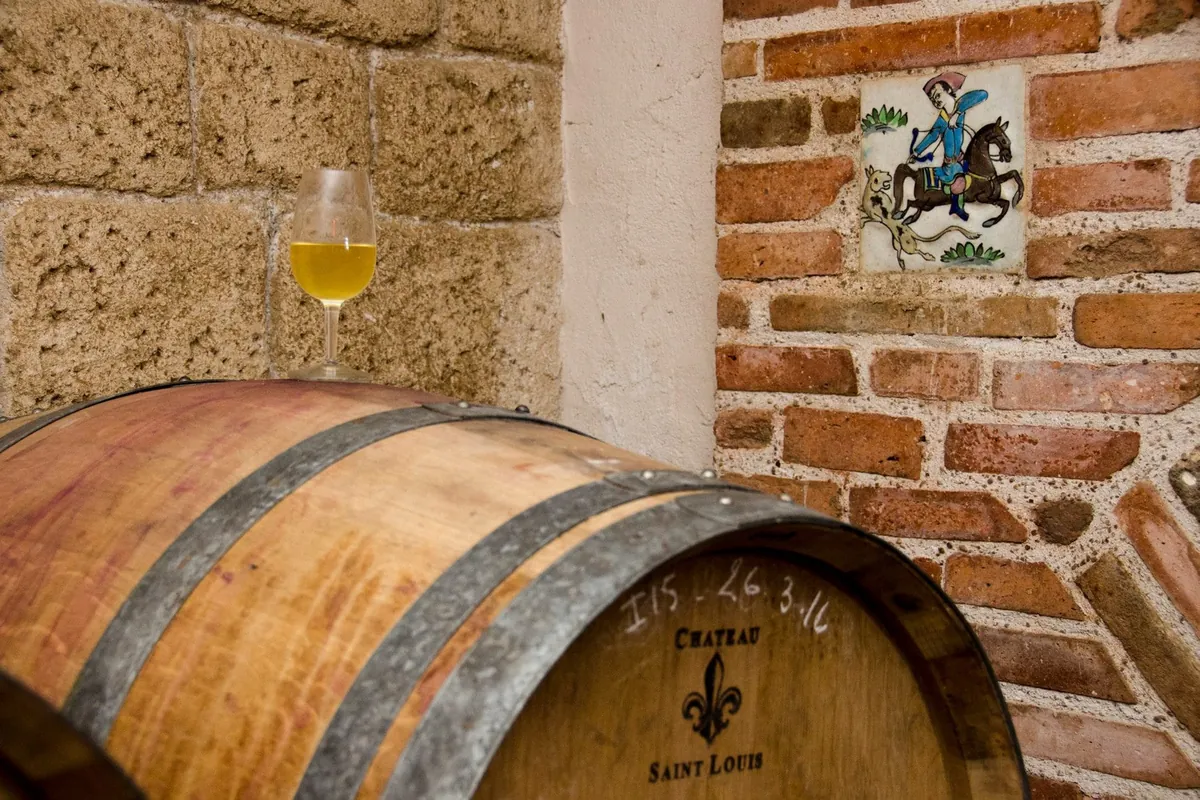
At Château Saint Louis
An organic estate at the northern tip of the appellation
Château Saint Louis is in Labastide-Saint-Pierre, at the northern tip of the Fronton PDO: 35 hectares, 30 of them vines farmed under certified organic agriculture since 2005, on boulbène, a silty sand lying on a clay layer. Founded in 1878, it has belonged to the Mahmoudi family since 1991.
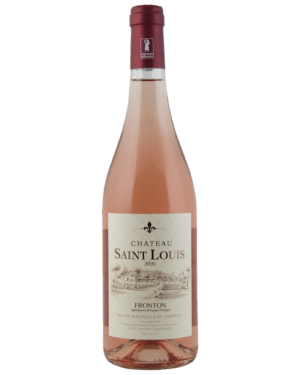
Our organic rosé and Libéré du Soufre, a Négrette made without added sulphites, are AOC Fronton. Other cuvées, such as La Tour or our Chardonnay, fall outside the appellation and are sold as IGP Comté Tolosan.
Come and taste at the estate The estate shop
Our AOC Fronton wines
Certified organic and sold direct, with no middleman between our cellar and your table.

At the table
What to serve with a Fronton?
- the red: grilled red meat, game, blue cheeses
- the rosé: in summer, barbecues, tapas and mixed salads
Your questions
Frequently asked questions
What is the AOC Fronton?
A protected designation of origin in South-West France, north of Toulouse, covering twenty villages in Haute-Garonne and Tarn-et-Garonne. It produces still red and rosé wines based on Négrette.
Is there a white Fronton?
No. The AOC Fronton is reserved for reds and rosés. The region’s white wines, like our Chardonnay, are sold as IGP Comté Tolosan.
What is the grape of Fronton wine?
Négrette. It must make up at least 51% of each estate’s vines and at least 40% of each wine, where it remains the majority. Syrah, Cot, Fer, the Cabernets, Gamay and a few old varieties complete it.
Does Fronton wine keep?
The reds are pleasant young and also age well, according to the appellation’s specification. The rosés are drunk young.
What is the difference between Fronton and Côtes du Frontonnais?
It is the same appellation: recognised in 1975 as Côtes du Frontonnais, it has been called AOC Fronton since 2005.
Where can I buy Fronton wine direct?
At the estate, in Labastide-Saint-Pierre, or in our online shop: delivery is free in France from 12 bottles.
Further reading
- NégretteThe grape of Fronton, its history and a map of the twenty municipalities of the appellation.
- TannatThe tannic grape of South-West France, from Madiran to Uruguay.
- Chardonnay: dry or sweet?The white grape born in Burgundy: the sugar terms, its taste depending on climate and oak, its regions.
- Visit the estateVisit and tasting at Château Saint Louis, by appointment Monday to Saturday.
Sources
- Fronton AOC specification INAO
- Municipal boundaries API Géo
- Fronton on Wikipedia Wikipédia


