
A grape of South-West France
Cabernet Franc: origin, taste, appellations and our organic wines
The discreet parent of Cabernet Sauvignon and Merlot.


What is Cabernet Franc?
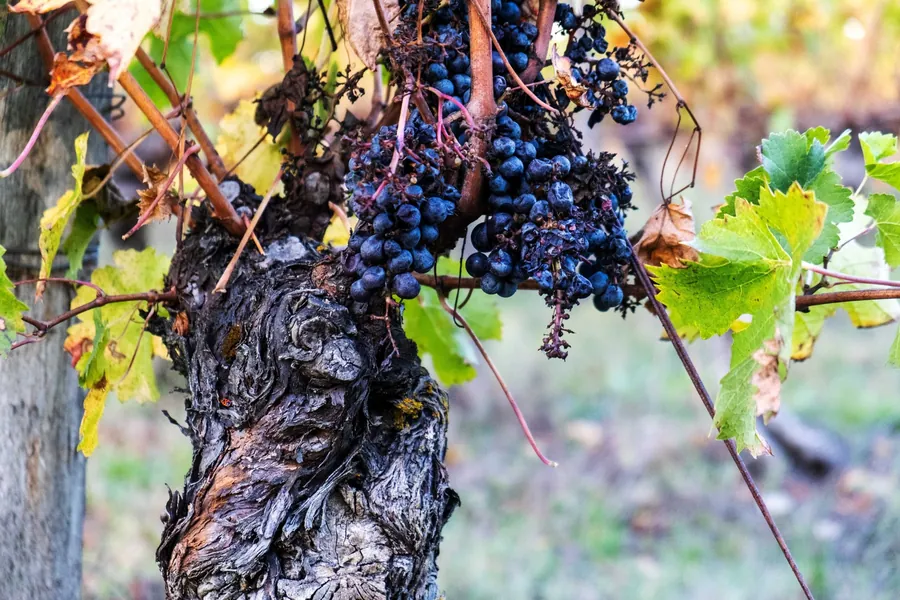
Cabernet Franc is a black grape from South-West France, probably from the Spanish side of the Pyrenees according to the ampelographer Guy Lavignac. Genetic analyses show it to be one of the two parents of Cabernet Sauvignon, with Sauvignon Blanc, and also of Merlot and Carménère. It gives fine, fragrant wines, with raspberry, violet and spice. It is found mainly in the Loire (Chinon, Bourgueil, Saumur-Champigny) and in Saint-Émilion, where it is called Bouchet. In Fronton it is allowed, with Cabernet Sauvignon, up to 25% of the vines: at Château Saint Louis it accompanies Négrette in L’Esprit, L’Esprit Gaulois, the Cuvée Tradition and L’Extrême.
Identity card
The grape at a glance
- Colour
- Black grape.
- Origin
- Probably the Spanish side of the Pyrenees, according to Guy Lavignac.
- Its offspring
- Cabernet Sauvignon (with Sauvignon Blanc), Merlot and Carménère.
- Other names
- Bouchet in Saint-Émilion, Breton in Touraine.
- Its wines
- Great aromatic finesse, notes of spice, sometimes green pepper.
- In Fronton
- Supporting grape, up to 25% of the vines together with Cabernet Sauvignon.
In the glass
What does Cabernet Franc taste like?
Lighter than Cabernet Sauvignon, Cabernet Franc is recognised by its fragrance: raspberry, violet, spice, and sometimes a note of green pepper when the grapes are less ripe. In a blend, it brings finesse and a peppery touch to more powerful grapes.
Fruit and flowers
- raspberry
- violet
Spice
- pepper
- green pepper
Where it grows
From the Loire to Saint-Émilion
- The Loire
- Its great territory for red wines: Chinon, Bourgueil, Saint-Nicolas-de-Bourgueil, Saumur-Champigny.
- Bordeaux
- A blending grape in the Médoc and Saint-Émilion, where it is called Bouchet; Château Cheval Blanc has about 60%, an exception.
- Italy
- A supporting grape in many appellations, such as Bolgheri.
- Fronton
- Supporting grape of the AOC, up to 25% of the vines together with Cabernet Sauvignon.
At Château Saint Louis
Cabernet Franc in four of our reds
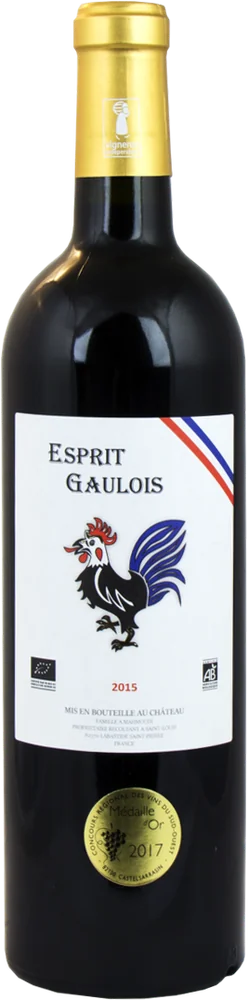
At Château Saint Louis, Cabernet Franc always accompanies Négrette. It makes up 15% of L’Esprit and L’Esprit Gaulois, two reds aged twelve to twenty-four months in oak barrels, and 5% of the Cuvée Tradition and L’Extrême.
Négrette brings fruit and violet; Cabernet Franc brings the structure and spice that carry long ageing. Our vines have been farmed under certified organic agriculture since 2005.
Come and taste at the estate The estate shop
The cuvées
Certified organic and sold direct, with no middleman between our cellar and your table.
Cabernet Franc, Pinot Saint Georges / Négrette
Vin Rouge BIO - L'Esprit Gaulois 2022
Red wine
12,00 €
Add to cart- Silver Medal 2022

Cabernet Franc, Pinot Saint Georges / Négrette
Organic Red Wine — Esprit 2018
Red wine
20,00 €
Add to cart - Gold Medal 2021
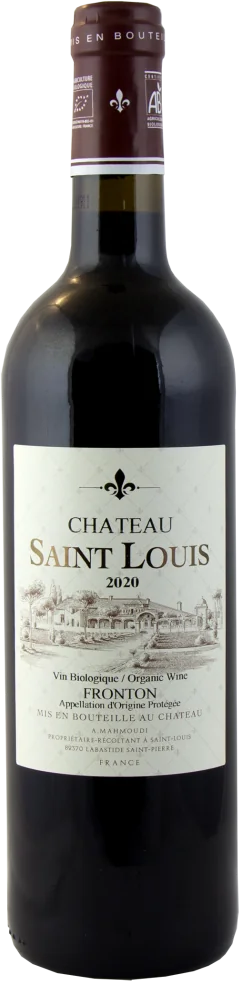
Cabernet Franc, Gamay, Pinot Saint Georges / Négrette, Syrah
Organic Red Wine — Tradition Rouge 2020
Red wine
14,00 €
Add to cart - Award-winning wine
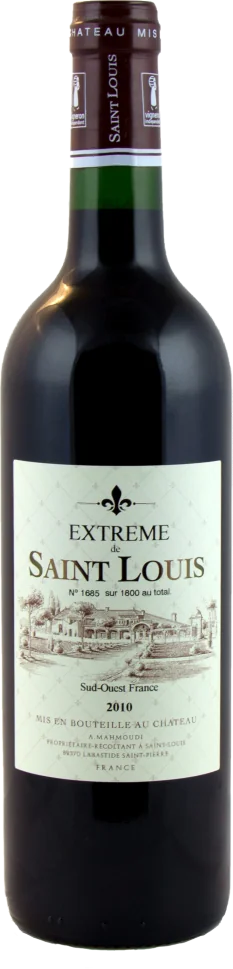
Cabernet Franc, Malbec, Pinot Saint Georges / Négrette
Organic Red Wine - L'EXTREME 2016 BIO
Red wine
58,00 €
Add to cart
At the table
What to serve it with?
- red meat and roast poultry
- charcuterie
- goat’s cheeses and pressed cheeses
Your questions
Frequently asked questions
What is the difference between Cabernet Franc and Cabernet Sauvignon?
Cabernet Franc is one of the parents of Cabernet Sauvignon, born from its cross with Sauvignon Blanc. It gives lighter, more fragrant wines, with raspberry, violet and spice.
Where does Cabernet Franc come from?
From South-West France, and probably from the Spanish side of the Pyrenees according to the ampelographer Guy Lavignac. Today it is found mainly in the Loire and in Bordeaux.
What does Cabernet Franc taste like?
Raspberry, violet and spice, sometimes a note of green pepper; in a blend, it brings finesse.
Is Cabernet Franc allowed in Fronton wine?
Yes, it is a supporting grape of the AOC Fronton: together with Cabernet Sauvignon, it can occupy up to 25% of each estate’s vines.
Which Château Saint Louis wines contain Cabernet Franc?
L’Esprit and L’Esprit Gaulois (15%), the Cuvée Tradition and L’Extrême (5%), always with Négrette.
Further reading
Sources
- Cabernet Franc on Wikipedia Wikipédia
- Cabernet Franc (genetic offspring) Wikipedia
- Fronton AOC specification INAO


