


A grape from the Rhône
Syrah: origin, taste, appellations and our organic wines
Violet and pepper, from the Rhône to Australia.


What is Syrah?
Syrah is a French black grape, born in the northern Rhône Valley. Genetic analyses in 1998 showed it to be the offspring of Mondeuse Blanche and Dureza, an old variety from the Ardèche. It gives deeply coloured, very aromatic wines, with violet, black fruit, pepper and liquorice. The only red grape of Cornas and at least 80% of Côte-Rôtie, it has become one of the most planted grapes in the world, notably in Australia under the name Shiraz. In Fronton it is allowed up to 40% of the vines: at Château Saint Louis it goes into the Cuvée Tradition and La Tour.
Identity card
The grape at a glance
- Colour
- Black grape.
- Origin
- The northern Rhône Valley.
- Parents
- Mondeuse Blanche and Dureza, according to the 1998 genetic analyses.
- Other names
- Shiraz in Australia; Hermitage in Switzerland and Australia.
- Worldwide
- About 190,000 hectares in 2015, in 31 countries, according to the OIV.
- In Fronton
- Supporting grape, up to 40% of an estate’s vines.
In the glass
What does Syrah taste like?
Syrah gives deep-coloured, low-acid, generous wines. Young, it smells of violet, raspberry, blackcurrant and blackberry, with a touch of pepper and liquorice; with age it evolves towards leather and truffle. In a blend, it brings colour and spice.
Young
- violet
- black fruit
- pepper
With age
- liquorice
- leather
- truffle
Where it grows
From the Rhône to Australia
- The northern Rhône
- Its birthplace: the only red grape of Cornas, at least 80% of the grapes of Côte-Rôtie, and the heart of Hermitage, Crozes-Hermitage and Saint-Joseph.
- The South of France
- Widely planted in Languedoc and the southern Rhône, where it is blended with Grenache.
- Australia
- James Busby brought back cuttings in 1831; under the name Shiraz, it became one of the major grapes there, notably in the Barossa Valley.
- Fronton
- Supporting grape of the AOC, up to 40% of the vines, behind Négrette.
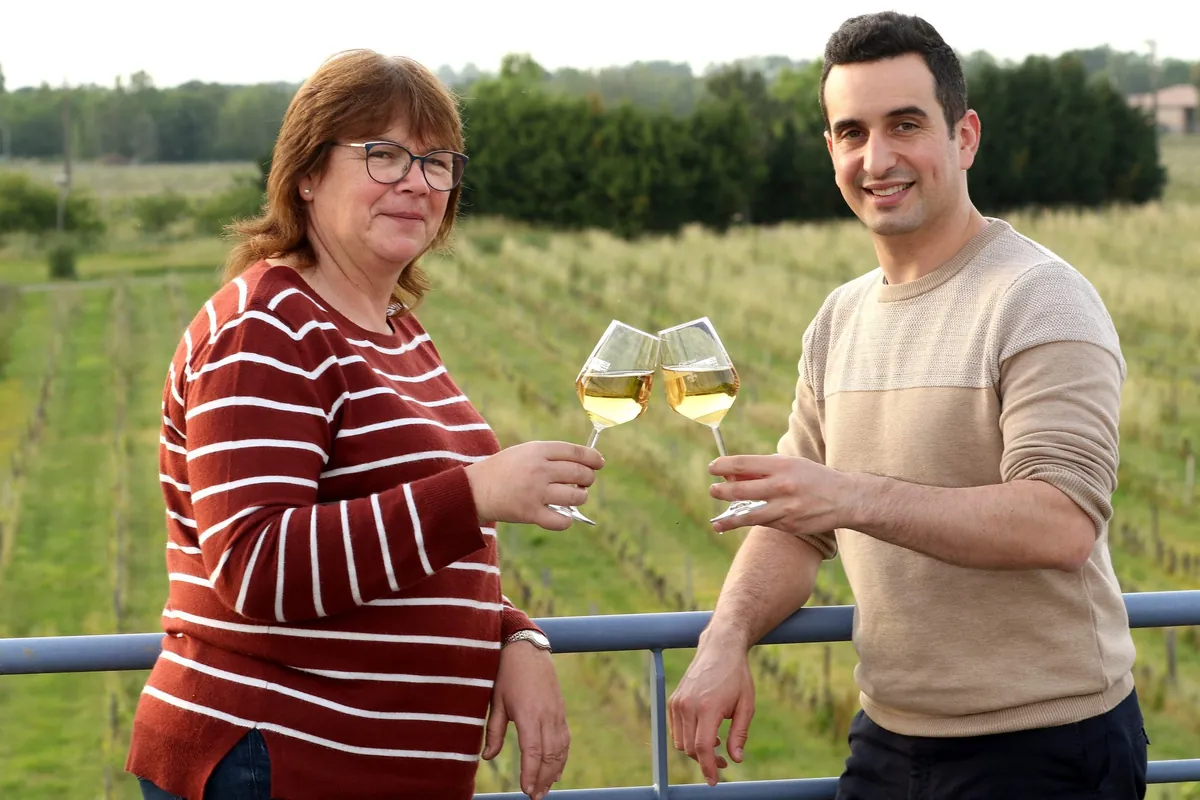
At Château Saint Louis
Tradition and La Tour: Syrah with Négrette
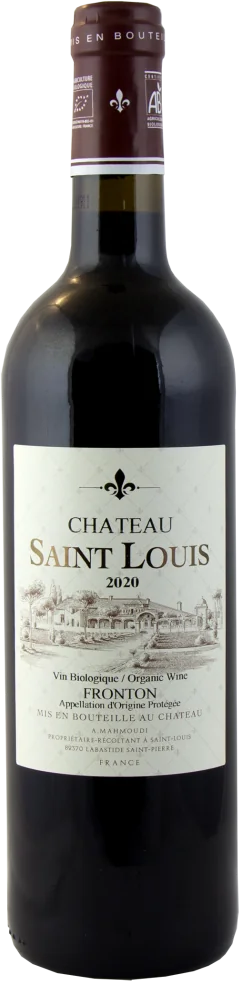
At Château Saint Louis, Syrah accompanies Négrette. It makes up 20% of the Cuvée Tradition, with Négrette (70%), Gamay and Cabernet Franc (5% each), and it goes into La Tour, with Négrette and Tannat.
Négrette brings fruit and violet, Syrah colour and spice. Both cuvées are sold as IGP Comté Tolosan, and our vines have been farmed under certified organic agriculture since 2005.
Come and taste at the estate The estate shop
The cuvées
Certified organic and sold direct, with no middleman between our cellar and your table.
At the table
What to serve it with?
- grilled meat and skewers
- lamb with herbs
- strong cheeses
Your questions
Frequently asked questions
What is the difference between Syrah and Shiraz?
None: it is the same grape. Shiraz is the name it is given in Australia and in part of the New World.
Where does Syrah come from?
From the northern Rhône Valley. Genetic analyses in 1998 showed it to be a cross between Mondeuse Blanche and Dureza; the legends that bring it from Syria or Shiraz have not been confirmed.
What does Syrah taste like?
Deeply coloured, aromatic wines: violet, red and black fruit, pepper and liquorice, evolving towards leather and truffle with age.
Is Syrah allowed in Fronton wine?
Yes, it is a supporting grape of the AOC Fronton, limited to 40% of each estate’s vines, with Négrette remaining the majority.
Which Château Saint Louis wines contain Syrah?
The Cuvée Tradition, with 20% Syrah alongside 70% Négrette, and La Tour, which blends Négrette, Syrah and Tannat.
Further reading
- Fronton wineThe appellation, its grapes, its rules and its red and rosé wines.
- Malbec (Cot)The grape of Cahors and Argentina, allowed in Fronton.
- Cabernet FrancThe parent of Cabernet Sauvignon and Merlot.
- NégretteThe grape of Fronton, its history and a map of the twenty municipalities of the appellation.
Sources
- Syrah on Wikipedia Wikipédia
- Distribution of the world’s grapevine varieties OIV, 2017
- Fronton AOC specification INAO


