

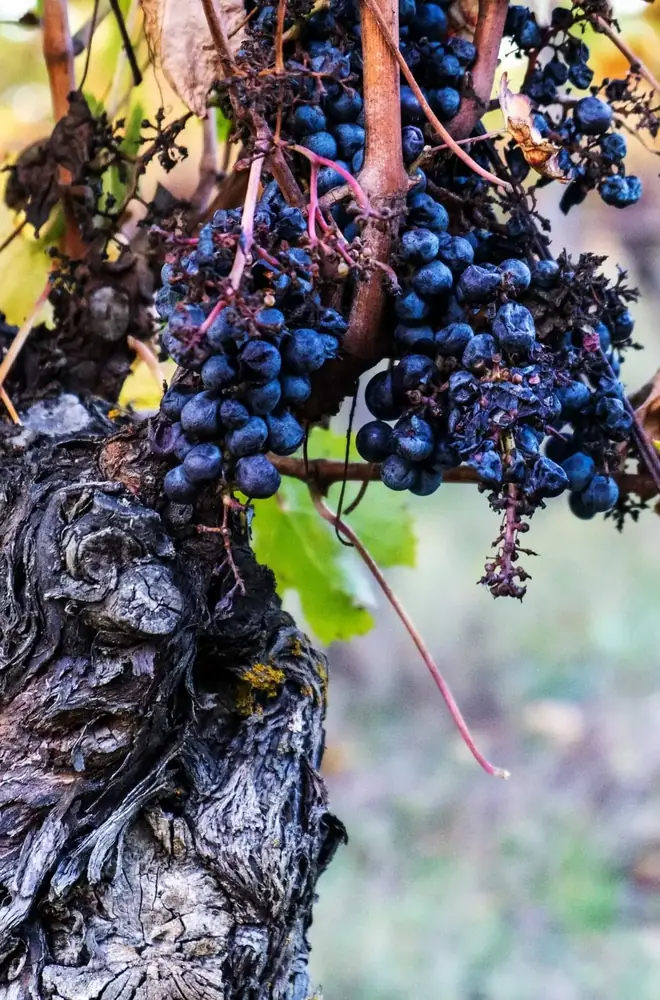
A grape of South-West France
Tannat: origin, taste, appellations, and our organic red wine
A grape rich in tannin, from Madiran to Uruguay.


What is Tannat?
Tannat is a black grape from South-West France, probably from the Béarn, whose name is said to come from the Occitan “tan”, tannin. It gives very dark wines, rich in tannin, with marked acidity. It is the main grape of Madiran, where it must be the majority in every wine; it is also found in Saint-Mont, Irouléguy, Tursan, the Brulhois and Cahors. Brought to Uruguay in 1870, it has become the country’s emblematic grape. It is not one of the AOC Fronton grapes: at Château Saint Louis it goes into La Tour, an organic red IGP Comté Tolosan.
Identity card
Where does Tannat come from?
- Colour
- Black grape, with an almost blue-black violet skin.
- Origin
- Probably the Béarn, at the foot of the Pyrenees.
- First mention
- 1783-1784, noted by the intendant Dupré de Saint-Maur as “recently cultivated”.
- Its name
- From the Occitan “tanat”, from “tan”, tannin.
- Its tannins
- Concentrated mainly in the seeds rather than the skin.
- Other name
- In Uruguay it is also called “Harriague”, after the man who planted it there.
Source: Wikipedia article on Tannat.
In the glass
What does Tannat taste like?
On its own and young, Tannat is powerful: an almost black colour, tight tannins, acidity that holds it up. That is why it is aged for a long time, often in barrel, or blended with softer grapes, such as Cabernet Franc in Madiran or Négrette here. With time its tannins melt and the wine gains depth.
Young
- almost black colour
- tight tannins
- marked acidity
Blended or aged
- melted tannins
- more suppleness
- ageing potential
Where it grows
From Madiran to Uruguay
- Madiran
- Its flagship appellation, reserved for reds: Tannat is the main grape there and the majority in every wine, with Cabernet Franc, Cabernet Sauvignon and Fer in support.
- The rest of the South-West
- Saint-Mont, Irouléguy in the Basque Country, Tursan, the Brulhois and Cahors, where it complements Malbec.
- Uruguay
- Brought from the Basque Country in 1870 by Pascual Harriague, it has become the country’s emblematic grape.
- Fronton
- Not in the AOC specification: the region’s Tannat wines are sold as IGP Comté Tolosan.
Sources: specifications of the Madiran and Fronton PDOs; Wikipedia article on Tannat.
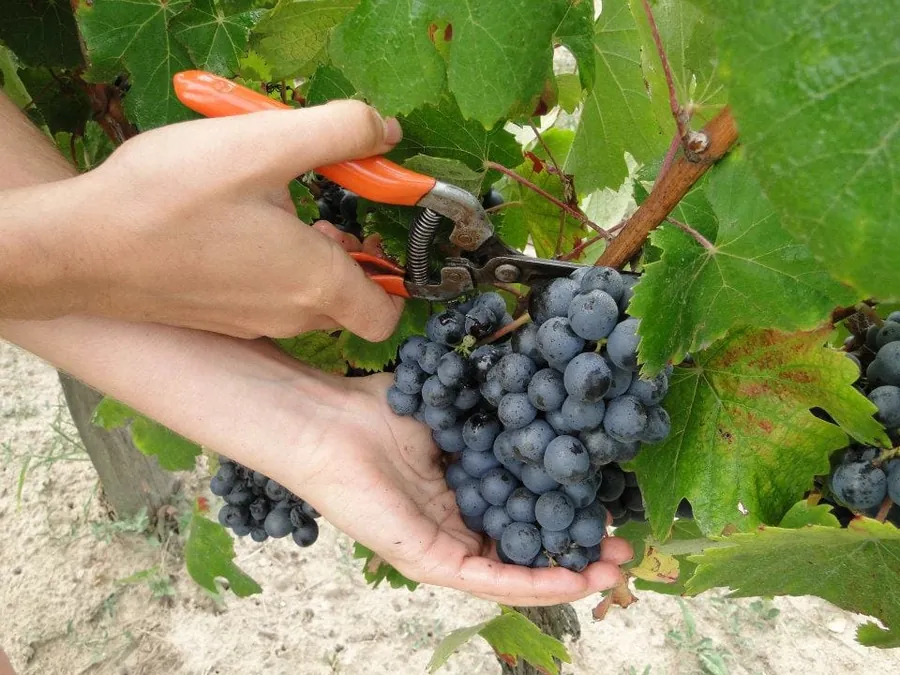
At Château Saint Louis
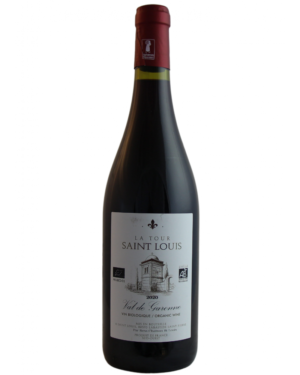
La Tour: Tannat with Négrette
At Château Saint Louis, Tannat is not drunk on its own: it goes into La Tour, blended with Négrette and Syrah. Négrette brings fruit and violet, Tannat brings structure. Each grape is vinified separately; 10% of the wine is aged six to twelve months in oak barrels, the rest in tank.
Because Tannat is not one of the AOC Fronton grapes, La Tour is sold as IGP Comté Tolosan. Like all the estate’s vines, they have been farmed under certified organic agriculture since 2005, on boulbène.
Discover La Tour The estate shop
Taste our Tannat
Certified organic and sold direct, with no middleman between the cellar and your table.
At the table
What to serve with Tannat?
- duck breast and duck confit
- grilled red meat and slow-cooked stews
- Pyrenean sheep’s cheeses
Your questions
Frequently asked questions
Is Tannat a tannic wine?
Yes, that is even the probable origin of its name, from the Occitan “tan”, tannin. Its wines are deeply coloured, tannic and markedly acidic; ageing and blending soften them.
Where does Tannat come from?
From South-West France, probably the Béarn. Its first written mention dates from 1783-1784.
Where is Tannat grown in France?
Above all in Madiran, where it is the main grape, and also in Saint-Mont, Irouléguy, Tursan, the Brulhois and Cahors.
Why is Tannat associated with Uruguay?
Pascual Harriague brought it there from the Basque Country in 1870, and it became the country’s emblematic grape, where it is also called “Harriague”.
Is Tannat allowed in Fronton wine?
No, it is not one of the AOC Fronton grapes. Wines that contain it, such as La Tour from Château Saint Louis, are sold as IGP Comté Tolosan.
What to serve with Tannat?
With South-West cooking: duck breast and duck confit, grilled red meat, slow-cooked stews, Pyrenean sheep’s cheeses.
Further reading
- Fronton wineThe appellation, its grapes, its rules and its red and rosé wines.
- NégretteThe grape of Fronton, its history and a map of the twenty municipalities of the appellation.
- Chardonnay: dry or sweet?The white grape born in Burgundy: the sugar terms, its taste depending on climate and oak, its regions.
- Visit the estateVisit and tasting at Château Saint Louis, by appointment Monday to Saturday.
Sources
- Tannat on Wikipedia Wikipédia
- Specification of the AOC Madiran INAO
- Fronton AOC specification INAO


