

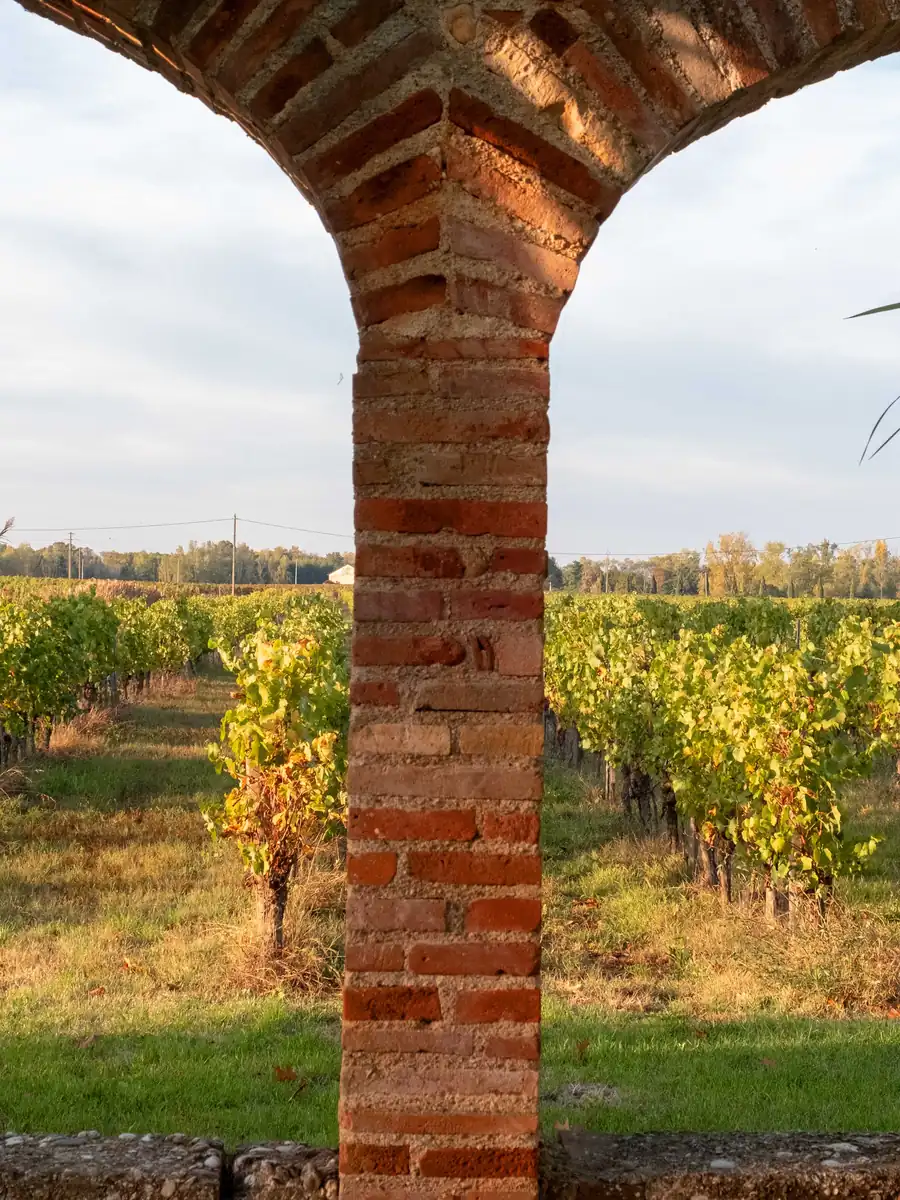
The grape of Fronton
Negrette: the red grape of the Fronton appellation, grown organically at Château Saint Louis
A black grape grown almost nowhere else, twenty kilometres north of Toulouse.


What is Négrette, and who grows it?
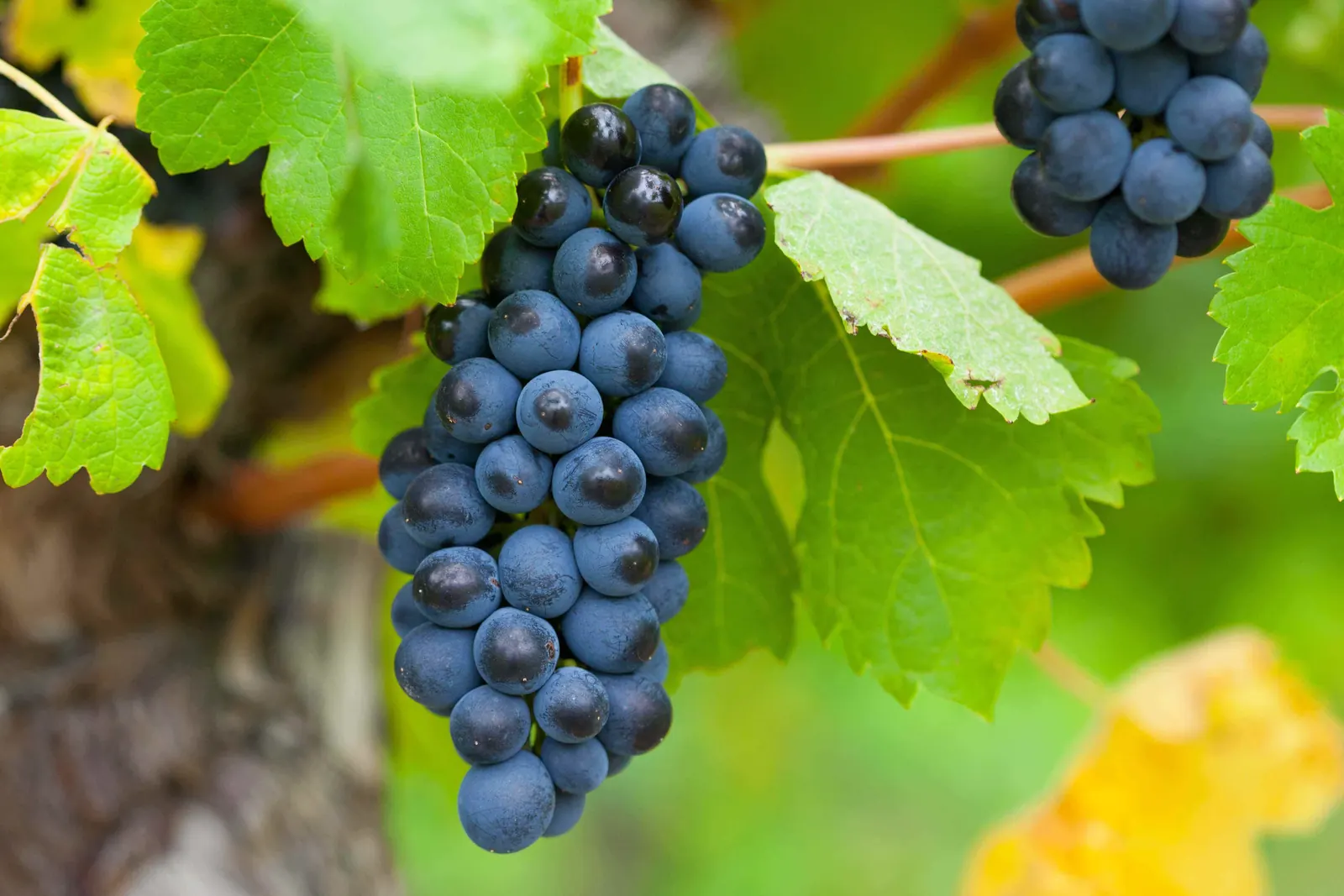
Négrette is the principal grape of the Fronton appellation, north of Toulouse, and it is grown almost nowhere else: just over a thousand hectares in all of France. At Château Saint Louis, a 35-hectare estate at Labastide-Saint-Pierre between Toulouse and Montauban, with 30 hectares of vines farmed organically under Ecocert certification since 2005, it grows on boulbène and silty sand over a clay layer. Vinified on its own it gives a deeply coloured wine, low in acidity and in tannin: violet and iris first, then blackcurrant, strawberry, raspberry, pepper and liquorice. Founded in 1878 and owned by the Mahmoudi family since 1991, the estate bottles Négrette both as a single varietal and at the heart of its blends.
- 51 %Négrette at least in the vineyard of every estate in the appellation
- 40 %at least in every Fronton wine, where it remains the main grape
- 20municipalities in the Fronton appellation area
- 1,096 haof Négrette in all of France in 2018
Nine centuries of vines
A Fronton story
- 12th century
Fronton is governed by the Knights Hospitaller of St John of Jerusalem. In 1122 a gift to the Order reserves one seventh of the grape harvest for the donor: the vineyard is already established.
- The legend
Legend has it that the Hospitallers brought Négrette back from Cyprus. Ampelographers today consider it a native of south-west France.
- 18th and 19th centuries
The vineyard at its height: loaded at Villemur, the wines sail down the Tarn to Bordeaux and on to all of Europe.
- 1878
Phylloxera reaches the Frontonnais. “Négret”, as it was then called, is replanted on rootstock. The same year, Château Saint Louis is founded.
- 1945
Fronton wines receive their first appellation, a year after those of Villaudric.
- 1975
The two vineyards join forces in the Côtes du Frontonnais AOC.
- 1991
The Mahmoudi family takes over Château Saint Louis.
- 1997
A conservatory of 190 Négrette clones is planted at Fronton. Five clones are now approved: 456, 580, 581, 582 and 663.
- 2005
The appellation becomes AOC Fronton. Château Saint Louis converts its vines to organic farming.
A rare grape
How much Négrette is there in France?
1,733 hectares at its peak, in 1968; 1,096 in 2018. Being fragile, Négrette was abandoned almost everywhere else; at Fronton, on poor, acidic, well-drained soils, it found its place.
The terroir
The terraces of the Tarn
Over the ice ages, the Tarn laid down alluvium from the Massif Central here: siliceous gravel, sand and pebbles, with no limestone. The appellation’s vines occupy its three terraces.
- Low terrace about 130 m
Silt, sand of varying coarseness and clay, irregularly mixed.
- Middle terrace 130 to 160 m
Older soils, more weathered and more leached.
- High terrace up to 200 m
The oldest: erosion has carried off the fine particles, leaving gravel and pebbles.
The climate
The Atlantic in spring, the Mediterranean in summer
Westerly rain waters the spring, 650 to 700 millimetres a year; summer is hot and sunny. Then comes the Autan, a hot, dry wind from the south-east: it hastens ripening and dries the vines after the August storms. For a grape as prone to rot as Négrette, it is an ally.
At Château Saint Louis it grows on boulbène, a silty sand soil lying on a layer of clay.
The appellation
Twenty municipalities, two départements
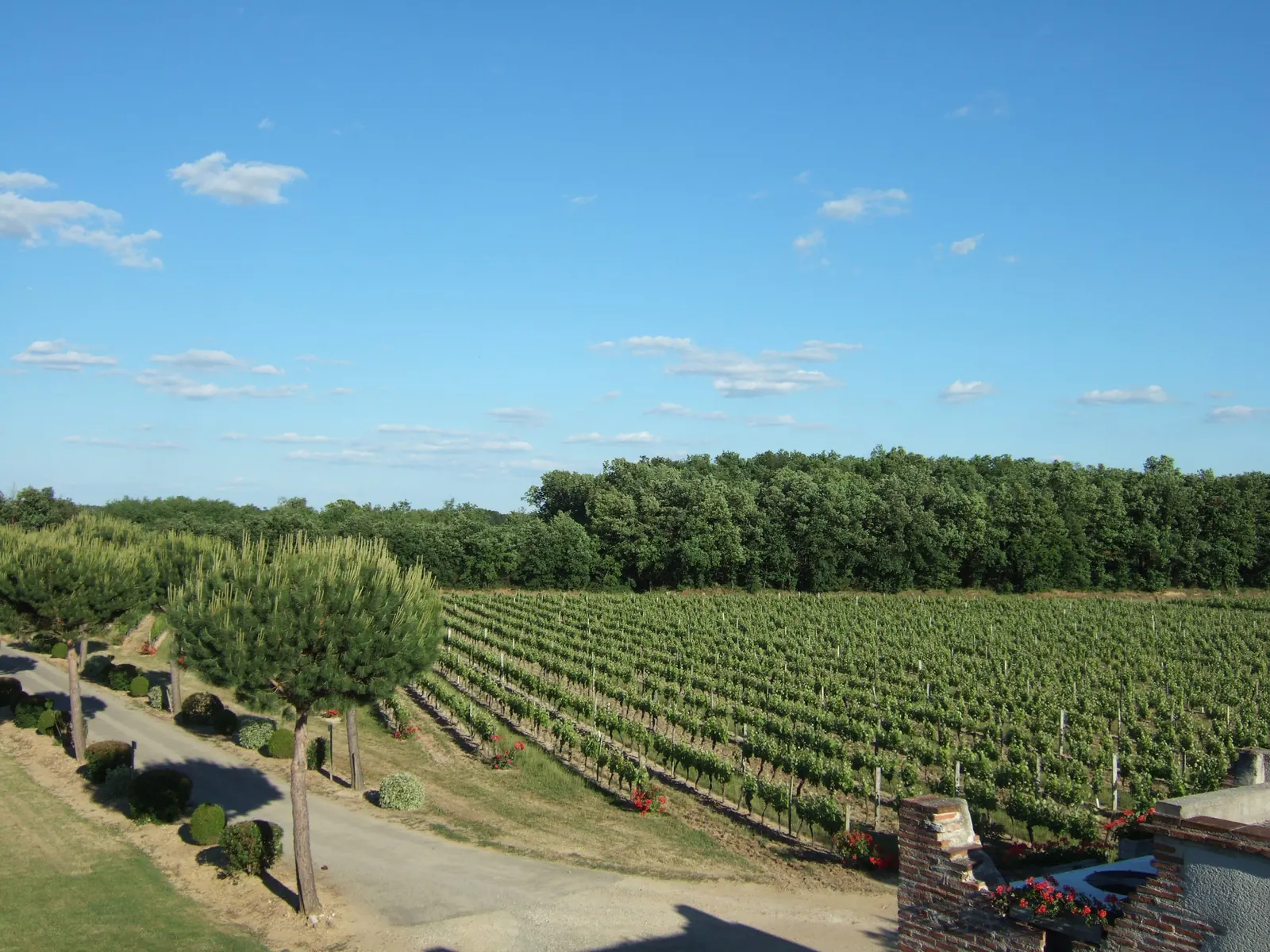
The Fronton appellation brings together nine municipalities in Haute-Garonne and eleven in Tarn-et-Garonne, between Toulouse and Montauban. Château Saint Louis is at Labastide-Saint-Pierre, at the northern tip of the appellation.
Château Saint Louis
The twenty municipalities
Haute-Garonne : Bouloc, Castelnau-d’Estrétefonds, Fronton, Saint-Rustice, Vacquiers, Villaudric, Villematier, Villemur-sur-Tarn, Villeneuve-lès-Bouloc.
Tarn-et-Garonne : Bessens, Campsas, Canals, Dieupentale, Fabas, Grisolles, Labastide-Saint-Pierre, Montbartier, Nohic, Orgueil, Pompignan.
Identity card
The grape at a glance
- Colour
- Black grape.
- Origin
- South-west France.
- Budburst
- Late: nine days after Chasselas.
- Ripening
- Second period: two to two and a half weeks after Chasselas.
- Bunches
- Small and compact, with round, small to medium, thin-skinned berries.
- In the vineyard
- Vigorous and fertile with short pruning, but prone to poor fruit set and millerandage: yields vary from year to year.
- Weaknesses
- Highly susceptible to grey rot, powdery mildew, leafhoppers and mites.
- Other name
- Sold in California as “Pinot St. George” until 1997. No synonym is recognised in Europe.
Source: Plantgrape’s Négrette entry, the catalogue of grape varieties in France.
In the glass
Violet first
Rich in anthocyanins, Négrette gives dark colour and very aromatic wines, low in tannin and acidity. On its own it is best drunk young, while the fruit is fresh; in a blend it gains structure and ageing potential. As a rosé it makes well-balanced wines.
Flowers
- violet
- iris
- jasmine
Fruit
- blackcurrant
- strawberry
- raspberry
Spice and more
- pepper
- liquorice
- cocoa
- leather

At Château Saint Louis
Organic Négrette since 2005
A grape this prone to disease is not grown organically by chance: it needs attention, row by row. Our vines have been certified by Ecocert since 2005.
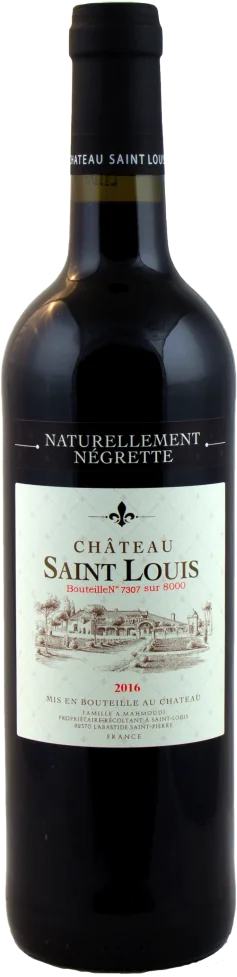
Everything happens at the estate: harvesting, winemaking, ageing and bottling. We vinify Négrette on its own, in Naturellement Négrette, and at the heart of our blends.
Come and taste it at the estate The estate shop
Our Négrette wines
Certified organic and sold direct, with no middleman between our cellar and your table.
- Silver Medal 2024
Pinot Saint Georges / Négrette
Naturellement Négrette 2022 – certified organic, naturally made
Red wine
13,00 €
Add to cart - Award-winning wine
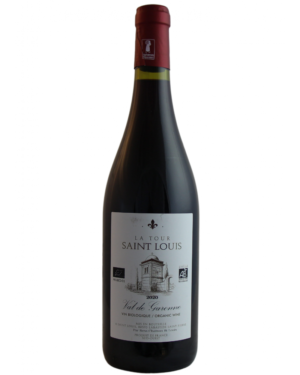
Pinot Saint Georges / Négrette, Syrah, Tannat
Organic Red Wine — LA TOUR
Red wine
9,50 €
Add to cart - Gold Medal 2021
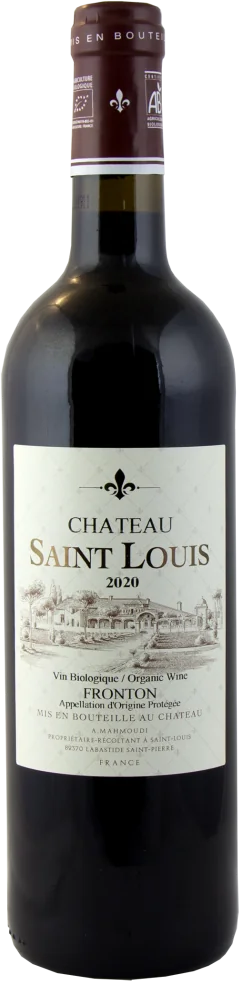
Cabernet Franc, Gamay, Pinot Saint Georges / Négrette, Syrah
Organic Red Wine — Tradition Rouge 2020
Red wine
14,00 €
Add to cart 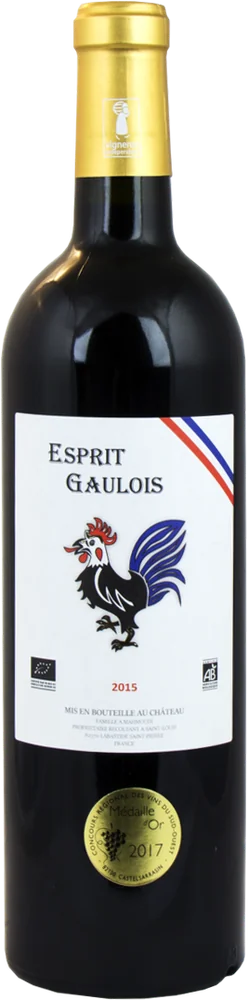
Cabernet Franc, Pinot Saint Georges / Négrette
Vin Rouge BIO - L'Esprit Gaulois 2022
Red wine
12,00 €
Add to cart- Award-winning wine
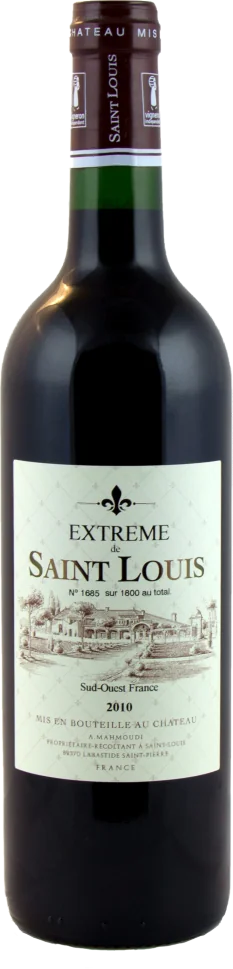
Cabernet Franc, Malbec, Pinot Saint Georges / Négrette
Organic Red Wine - L'EXTREME 2016 BIO
Red wine
58,00 €
Add to cart
At the table
What to serve with Négrette?
- grilled red meat
- game
- blue cheeses
- in summer, barbecues, tapas and mixed salads
Your questions
Frequently asked questions
What is négrette?
Négrette is a black grape of south-west France, grown almost only in the Fronton appellation, between Toulouse and Montauban. It is also known as Pinot Saint-Georges. It makes fruity, aromatic wines, low in tannin and deep in colour, with notes of violet, red fruit and spice, best drunk young.
Which Château Saint Louis wines are made from négrette?
Every red cuvée of the estate contains some. Naturellement Négrette and Libéré du Soufre are 100% négrette; Cuvée Tradition blends 70% with cabernet franc, gamay and syrah; L'Esprit 85% with cabernet franc; L'Extrême 50% with cabernet franc.
Why is négrette rare?
Because it is grown almost only in Fronton, where it is the appellation's main grape. Five approved clones (456, 580, 581, 582 and 663), from a conservatory set up at Fronton in 1997, preserve its character.
Sources
- Fronton AOC specification INAO
- Négrette grape variety sheet Plantgrape
- Municipal boundaries API Géo
- Négrette on Wikipedia Wikipédia


